Orchestrating our way out of Humanitarian Information Management Gridlock
Last fall, I had the opportunity to attend a Global Solution Networks event in Brussels where I was part of a panel with Thomas Hale who spoke about the concepts of Orchestration and Gridlock. Although he talked about these topics in relation to climate change and other thematic issues, I started reflecting how they relate to humanitarian information management. First I read a paper entitled Orchestration and Transnational Climate Governance that he authored with Charles Roger. Then I read a book he co-authored entitled Gridlock: Why Global Cooperation is Failing when We Need It Most with David Held and Kevin Young. Although they are focused on specific topics, I found several parallels in humanitarian information management and the challenges that we face today. I also realized that some individuals are starting to “orchestrate” within our field, but we can do A LOT more as organizations.
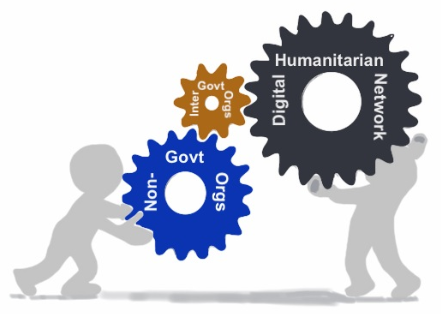
The authors defined gridlock as “the growing gap between our need for global solutions and the flagging ability of multilateral institutions to meet that need. This represents a breakdown of global cooperation that we call gridlock” and outlined the paths to gridlock as having been: multipolarity, institutional inertia, harder problems, and institutional fragmentation. Sound familiar to any of you information management practitioners?
How big is the challenge becoming? In 1909 there were 37 intergovernmental organization and in 2011 there were 7,608. According to Yearbook of International Organizations, international nongovernmental organizations had increased from 832 in 1951 to a whopping 56,834 in 2011. Mancur Olson noted a truism in his book - The Logic of Collective Action - that “the larger the group, the less it will further its common interests”. Such numbers make it much clearer to me why coordination is extremely difficult, yet very critical. So, if we have grown this big, how does the formal humanitarian community find a way to move forward without completely grinding to a halt?
But you asking: "Are we really in gridlock?” Perhaps we have been there for so long that we don’t know the difference. When working in a political entity like the United Nations, a information management officer must respect the sovereign rights to a country. If a country does not want us to respond to an emergency, we cannot (we have to be asked). We have to be VERY careful how we draw borders on maps. Often we cannot release products publicly without fear of government reprisal. We often stick to official numbers released by the government even if other sources contradict them. But, with the technology available in today’s age, the barriers to entry into humanitarian information management have dropped drastically. It means that groups can be quickly created and be completely virtual while not having to respect an affected countries sovereignty (e.g. to help a local NGO if they want). The Digital Humanitarian Network helped a local NGO with inter-organizational coordination during floods in India where the UN was not asked to respond. ACAPS, a non-governmental organization, can undertake and release analysis about emergencies (like the Syria crisis) when the UN cannot do so publicly. Are these kind of groups the mechanisms to help us escape gridlock?
With such actors maturing quickly, international organizations face the possibility of orchestrating our way out of humanitarian information management gridlock. What is orchestration exactly? International Organizations “engage in orchestration when they enlist intermediary actors on a voluntary basis, by providing them with ideational and material support, to address target actors in pursuit of IGO governance goals. Orchestration is thus both indirect (because the IGO acts through intermediaries) and soft (because the IGO lacks control over intermediaries).” Essentially, I see it a matter of aligning the goals of different groups to achieve a set outcome. It is neither delegation nor simple outsourcing.
So, could the DHNetwork and other NGOs become the intermediaries for the international humanitarian information management responders? Absolutely. Of course we will face challenges related to authority, data security & privacy, and legal frameworks. But, several of the DHNetwork members are further ahead in thinking about and finding solutions for these issues than most formal humanitarian organization. Beyond helping the international responders, groups like the DHNetwork can bring the world to help with complex challenges we often only assign a handful of people. Not a bad idea - no?
In my experience of pushing in the direction of bringing more people (virtually) to help me with hard humanitarian information management problems, I have learned a couple things that we need to keep in mind. First, we cannot simply consider them volunteers and we must recognized that they will often give more than 100%. Second, we need to value and support them. What can the UN and other International Organizations bring to the relationship? We can bring convening power, provide coordination support, lend legitimacy, enable ideational factors, and release material & intellectual resources. Simply put, we can provide the entrepreneurial environment to foster such work and collaboration.
Who do we need to make orchestration happen? We know that there are willing partners in the DHNetwork and several information management NGOs. The DHNetwork has even created guidance on how to collaborate with them. But we need more “orchestrators” in the formal humanitarian organizations. These need to be risk takers, innovators, and have a desire to improve the system. Shadrock Roberts, when he was with USAID, was a perfect example. We need more Shadrocks. These are the kind of people who need to be organizationally recognized, be protected by central innovation units and be allowed to fail occasionally. And we need more creative partnerships so that at the time of crisis, when an organization’s culture becomes malleable, orchestration can happen.
When I reflect on my work in UN-OCHA and co-founding the DHNetwork (in my spare time), I have realized that orchestrators are going to be the ones who grow the symbiotic exchange between the bottom-up (DHNetwork) and top-down (UN) camps. As Patrick Meier mentioned, in his introduction to my keynote at the International Conference of Crisis Mappers 2013, I have become somewhat of a “translational leader”. We need more people who are willing to actively straddle the two sides to make things happen. We need strong leaders who advocate reform that can lead us beyond gridlock. Will you be one of them?
This problem is hard. A few people will not be enough.
Andrej