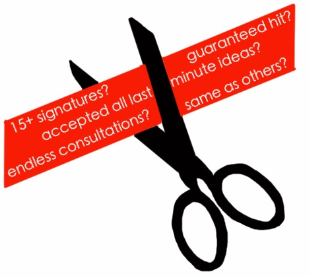
Time to cut the creative red-tape?
Quite often when I see outreach communication from the formal organizations in the humanitarian sector, it seems to be rather “safe”, traditional and/or somewhat stiff [although UNICEF’s recent gaming conference video was a bold exception]. Yet, we expect people to remember the message and take action simply on principle. What if we questioned that expectation, delegated creative authority and looked for engaging messaging styles (when appropriate of course)?
 In my day job, I oversee two blogs: HumanitarianResponse.info and Humanitarian.id. On both, I strongly encourage a more conversational tone and creativity by the author(s). Our aim is to put out content that we believe people will enjoy reading, want to send to others, and look forward to the next post.
More recently, I have encouraged a few individuals to take a more creative approach to capture attention about the need and benefits of the Humanitarian ID project. By setting the general guidelines and giving a wide berth for creativity, the resulting work has been truly inspirational.
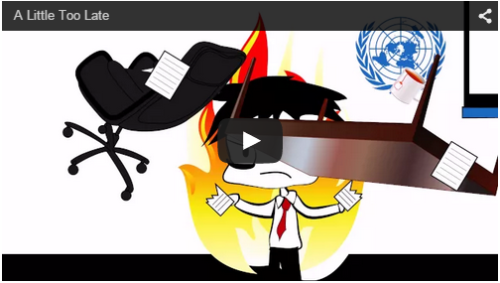
Madevi Sun-Suon created a Humanitarian ID cartoon strip about the frustrations humanitarians experience with outdated contact lists. Later she turned it into an animated video entitled A Little Too Late.
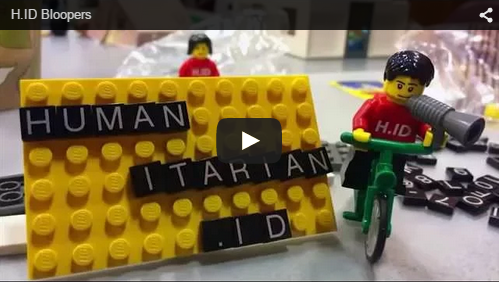
Hildemar Cruz, with the help of Yaelle Link and Monique Ndam Yamgouet, set out with a bucket of Lego and created several stop-motion Lego movies. She created two main videos: 1) the arrival story of someone who checks into Humanitarian ID before arriving in an emergency and 2) the story of woman who updates her contact details when she finds that her incorrect details has placed her in the wrong meeting.
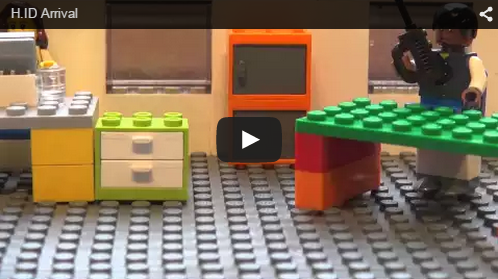
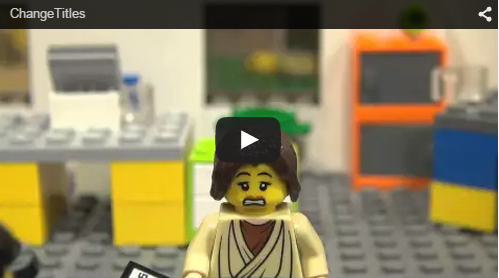
While creating the two Lego movies, she also captured some bloopers and some extra shorts.
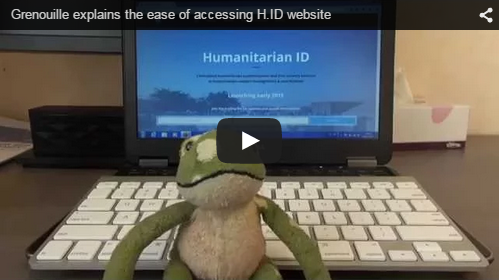
We also had a guest appearance from a minor humanitarian celebrity - Gren Ouille - as he showed his appreciation for the Humanitarian ID app.
It has been fascinating to watch these individuals work when they are offered the opportunity to be as creative as they want. Although I recognize that such arrangements can be difficult for a formal organization, I hope that we will begin to see more of this approach in the future. Perhaps with the right (trusted) staff, an organization will delegate decision making around messaging creation and distribution. Social media has forced this approach on the narrative and photograph sides. With the introduction of simple animation creation tools such as moov.ly, could we not assume that animation is next?
As Luis Hernando Aguilar recently mentioned to me: “We are no longer simply in the knowledge society, but rather in an attention society”. We need to adapt.
Andrej