Demystifying Quantum Computing for the Humanitarian Sector
What is quantum computing exactly? What is the current state of the technology? What is real and what is hype? What is a qubit? How and when will it affect the humanitarian sector? These were all questions that I pondered as I read the occasional news story about quantum computing and quantum supremacy over the past couple years.
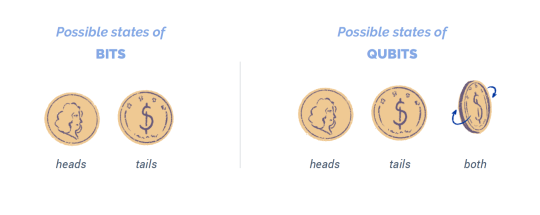
Quantum computers are fundamentally different from the computers that are widely used today. They process information differently as they operate using quantum mechanics. Our current computers use bits which permit only two states - 0 and 1. Quantum computers use qubits which can be in a state of 0, 1, or anywhere in between.
 The concept of quantum computing is not new. However, the recent fever to which several large private companies and some nations states are investing is quite new. And, with that comes a hype cycle. In the past two months alone Google has claimed quantum supremacy [PDF]. IBM, who is also working in the quantum space, openly refuted that claim [PDF]. And Amazon launched their quantum service [PDF].
This past summer, Stephanie Tran joined me and was keen to explore quantum computing and the questions surrounding it. What we quickly realized is that it was hard to determine the difference between what is hype and what is real. Thus we decided to put together a short paper - Quantum computing and the humanitarian sector - with the intention to demystify quantum computing so that humanitarian workers and beyond can realistically understand and plan for its potential emergence. Since the technology is still early in its development, this publication is meant as a primer to quantum computing in today’s context as opposed to a purely speculative investigation on its potential implications to humanitarian work.
Most people in the field note that there are only a few tasks that large scale quantum computers are expected to perform significantly better than a classical computer. One is the ability to break today’s most widely implemented encryption schemes. What does that mean for humanitarian organizations? It means that they should already be making efforts to ensure that confidential data with long-term security obligations is secure against adversaries with access to a large-scale quantum computer.
One fascinating fact that we learned was how cold a quantum computer must be kept. Qubits are incredibly fragile, with some requiring temperatures that are 250 times colder than deep space in order to remain stable. Translation: do not expect to have a quantum computer in your living room any time soon.
For more on what we discovered, download and read our paper: Quantum computing and the humanitarian sector
 [PDF]
A special thanks to the team at IBM Research who invited us to their offices, answered what probably seemed like endless questions, and showed us a functional quantum computer.
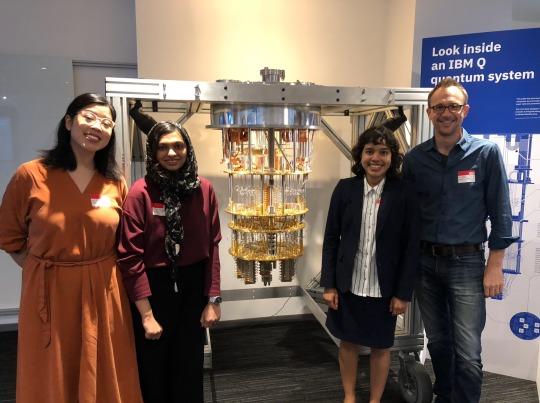 (Above is a model quantum computer)