Physical safety when introducing new technology in disaster response
Over the past months, I would like to think that the humanitarian sector has noticed the challenges of having introduced new or emerging technology into a response. From organizations having to scrub their social media and reports in response to Afghanistan, to the ICRC cyber attack, to the ongoing war in Ukraine, our use of technology has raised the “responsible use” and “digital safety” questions. How can we deliver aid when the internet becomes a weapon of war? How can we keep the humanitarian sector safe from digital threats? How do we operate when there are cyber attacks on national infrastructure, we become targets of a disinformation campaign or fall under a digital surveillance program?
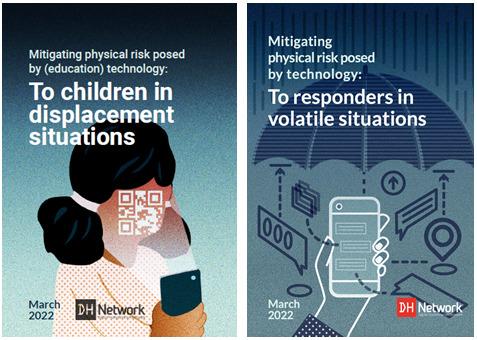
Under this umbrella, I was joined by three researchers - Kristen Pearn, Sarah A Jabbar & Sariel Lei - who compiled two reports. One focused on the physical safety of humanitarian responders in volatile situations (e.g. war) and the other focused on the physical safety of children when introducing new Edtech in displacement situations. Each paper explores their respective focus and makes concrete suggestions and future considerations.
- Mitigating physical risk posed by technology - To responders in volatile situations
- Mitigating physical risk posed by (education) technology - To children in displacement situations
 There is no question that technology has the ability to revolutionize our sector’s work. But, to be responsible, we cannot simply roll out new technology for the sake of its possible benefits. Rather, we must pause and ensure that the digital safety and security of our colleagues and those we serve is built in. In today’s era, their lives are on the line.
So, when kicking off or managing a humanitarian technology project, perhaps the best phrase to keep in the back of one’s mind should be: “Maximize your chance of success by minimizing your chance of failure.” Human life may very well be at stake.
Be safe,
Andrej