Earth Observation Augmenting Anticipatory Action?
As more data has become available and humanitarian organizations have hired more data-skilled personnel, the goals and ideals of anticipatory action have become increasingly desired by the sector. The prevalence of anticipatory action is exemplified in its prominence at the 2022 Humanitarian Networks and Partnerships Weeks, where it was one of nine focuses.
When Sarah Whelan joined me this past summer, she posed an interesting question: Is or can Earth Observation (EO) data be used to enable or augment anticipatory action in climate-induced humanitarian crises? I wanted to assume so, but overselling and overpromising of EO data have historically increased skepticism towards the technology and diluted its appeal.
Over the course of a few months, she conducted several interviews with experts in the field and dug into as much literature as she could find. We are now releasing our report from those efforts - How Earth Observation Can Enable Anticipatory Action in Humanitarian Crises.
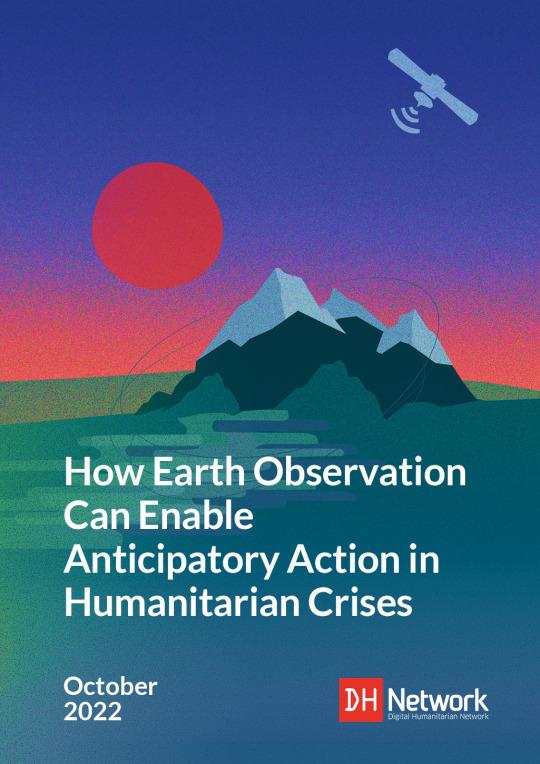 [PDF]
The report covers several important aspects, but I have pulled out a few that I believe are most important:
- Earth observation data can fill the gaps in data prevalence and access in remote areas with limited local meteorological, hydrological and/or geological data collection, thereby enabling locally informed anticipatory action
- To ensure successful interpretation and dissemination of forecasts based on Earth observation, continued collaboration and effective communication will become increasingly important as more actors enter the anticipatory action space.
- Earth observation is one piece in the value chain, so actors should remain focused on their specialties to enable others.
The report also recognizes the importance of human inclusion within the anticipatory action value chain. EO data provides some exciting possibilities and can fill some gaps, but is still only one piece of the puzzle
Andrej