Building with an AI agent via WhatsApp
No laptops. No new apps. No new accounts. Just WhatsApp, where I am every day, and my Instinct Agent. When I first started this work, I would tell people that my brain was hurting. The more I did, the bigger the descriptor became. I now say that my brain is exploding. What is possible and how this will change things - like how we manage information and how we design our processes - feels a bit incomprehensible.
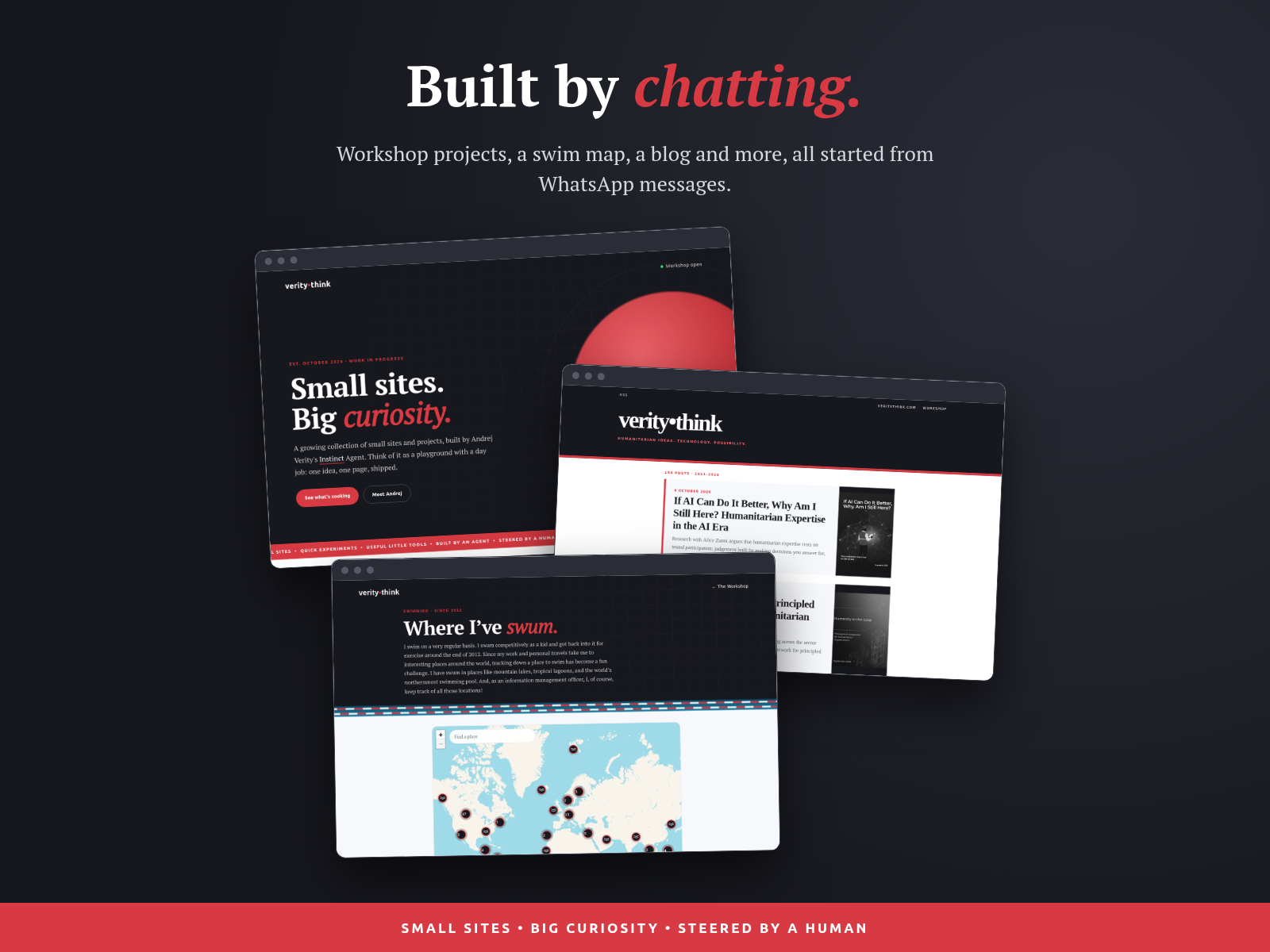
Over the last month, I have worked with my agent to create and build all the projects on my new Workshop site plus a few more that are awaiting for formal approval. This post is about how that went. And, as I said earlier, it has made my brain hurt (in an astonished way).
I just chat with it it
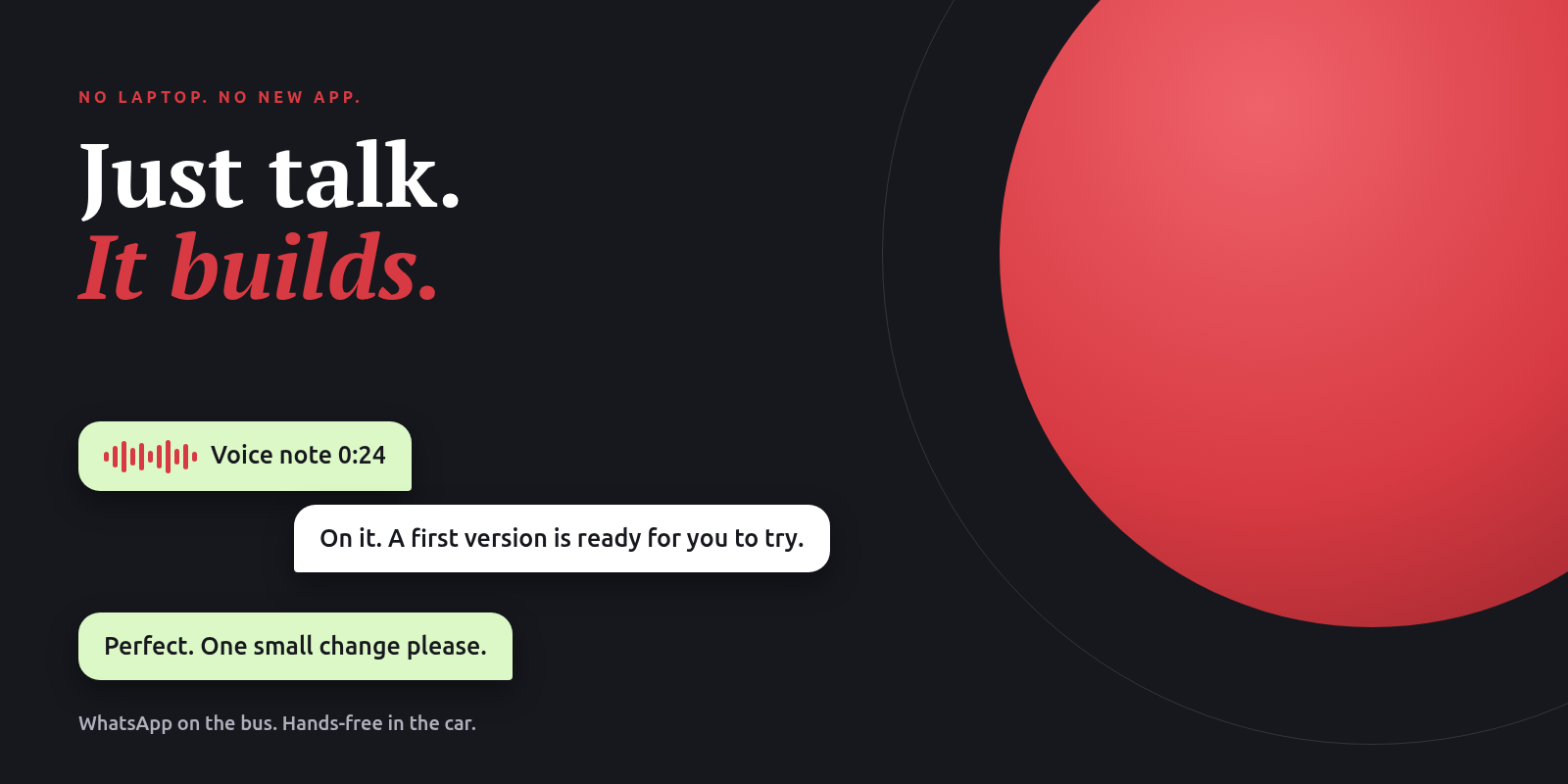
This is what I most want people to understand: I build things by simply chatting or talking. I send a chat message or a voice note, and the agent starts work.
I have done this while shopping. I have done this while commuting on a bus. And, just yesterday I was in a car, hands-free, talking to the agent while we built a rather advanced solution (not public just yet). I did not open a laptop. I did not type code. I just said what I wanted, and then I listened to what it had done. It made me feel like I had stepped way into the future.
In a couple of messages, I can have something started. Often it is about 80 percent done and already useful. Then we fix the last part together. That is my experience, and yours may be different. But it changed how I think about trying new ideas. If I have a thought on the bus or while out for a walk, I can start on it right then.
Real things, not toys
I use what we build. Here are some of the public projects so far:
- Key figure extractor (pulling key figures from narrative content to capture the trends)
- Interactive mapping that is built from a Google Spreadsheet (e.g. my Swimming map)
- Monitoring trends over time (e.g. AI jobs in the Humanitarian sector)
- A sale scan that tells me when specific products are on sale.
- A flight scan looks for fares….but under general conditions rather than filter-style critera (e.g. desires like temperature/sun, general price ranges, etc.).
- The Reading Room shows my papers.
- Family research is digging into my ancestors.
- An accommodation hunter seeks out rentals based on my criteria.
- This blog, all 104 posts, was completely migrated. It now runs from Google Docs (posts) and a sheet (publishing control). I write a post in a Doc, add a row, and it goes online.
I also built pages for the Digital Humanitarian Network: a brand page, and a demo of an emergency overview. How these technologies can be used for humanitarian purposes is where I get even more excited - if they are going to exist, let’s find constructive ways to use them to actually help people.
Privacy first
Some people I talk to are nervous about AI agents, mostly because of their private information. That is definitely something I was worried about. So before I even got started, I gave the agent its own identity: its own Google account, its own GitHub Hub account, its own logins for the genealogy sites, and its own login for rental websites. None of these are my personal accounts. Everything the agent does is tagged or logged with the Agent’s ID.
Files work in a similar way. The agent creates a document or a sheet in its own account and then sends me an ownership transfer. When I accept, I own the file, and the agent keeps edit access so it can keep helping. The agent works with the files it creates and the folders I choose to share with it. I decide what goes in those folders.
This is my own setup, and I chose it on purpose. I cannot guarantee that every agent setup will work this way. But, if you start working with an AI Agent, decide what you want to share before you start.
Unexpected find
As mentioned, the agent is also helping me with my family research, and one find was a real thrill. It helped me trace the earliest documented mention of the name Verity that I know of: an Adam le Verite in a Worcestershire tax record from around 1280. That is the 13th century – more than 700 years ago. The Agent tracked down where the tax records were stored, how to make a request for a digitized copy and then even drafted a well articulated message (that an archivist would appreciate). After a couple back-and-forths with the archives, I had the digitized version safely stored in my family research. It was no longer family folklore…..I had documented proof!
What I learned
- Start small. One message can get an idea going.
- You can do it by voice, on the move.
- Keep the agent's accounts separate from yours, and share only what it needs.
- Use a spreadsheet when you want to change things often.
- Ask the agent for its sources, then read them yourself.
- The agent builds, and you still steer.
Building with an AI agent hasn't just streamlined my workflow. It has completely redefined my understanding of what one person can accomplish. We are moving into an era where the barrier between an idea and its execution is virtually gone, opening up endless possibilities for innovation, problem-solving, and meaningful impact.
If you are curious about exploring how AI agents can transform your own projects or organization, I would love to connect and collaborate. Reach out, and let's build something incredible together.
Andrej