Creative Data Sharing and Open Humanitarianism
One major challenge during a humanitarian response is simply getting organizations, governments, and private sector to share their data. I have heard an amazing range of excuses from the logical (security), to fear of others trying to find un-constructive or pointless correlations (like Spurious Correlations), to the rather absurd (“HQ has not told me to share”). Even groups who you think have to share often do not. In an interview with NPR recently (MP3), Graeme Wood noted that the different peacekeeping missions in the Central African Republic, one of the most severe crisis in the world right now, do not trust each other enough to share information or operational plans amongst themselves. There seems like an endless list of reasons that people find to not share data. So, how can we get people to share? I see it as a three-prong approach: technology, human, and policy.
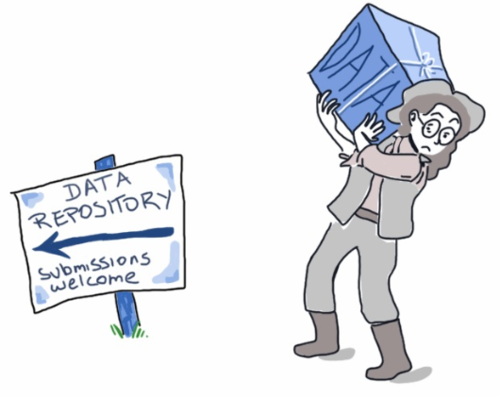
Of course we can, will, and need to build technical applications to enable people to share. As Jonathon Morgan of Ushahidi noted in the blog post announcing Crisis.net, which aims to be the crisis data firehouse, we are in an era where data is “locked away in forgotten databases, undocumented APIs, or proprietary formats that hide data in pie charts and situation reports.” The Humanitarian Data eXchange team is working on a platform that will define exchange standards, accept data, curate valuable information, provide an analytical interface, and enable a common operating picture for humanitarians. Both are formidable efforts that I am following keenly. I have been around the humanitarian field long enough to realize that a technical solution will unfortunately not magically change everything. We will need to put effort into the human and policy aspects of the data sharing puzzle.
Bringing the human element to technical solutions will help. As Frog points out, any technical solution must listen to and integrate user needs while adding benefit and using data responsibly if we want people to be comfortable with sharing data. And, as Eduardo Jezierski suggested with a health commons concept and Patrick Meier notes in his #noshare concept, we need to treat data about individuals with utmost care. Any technical solution is going to need to incorporate such integrity at its core - it will need superior user permissioning around data access.
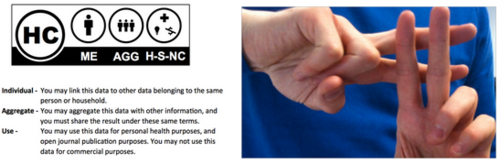
But, when reflecting on the above, I recognized that we still need more “human” effort than just building technology to meet user requirements. OCHA runs information management working groups (IMWG) in every major crisis to which they respond and this does help as it brings a human, in-person interface to a technical structure. Yet, having run several of these IMWGs in major emergencies, I know that it is still not enough. And, I am regularly asked by OCHA Information Management Officers how to get partners to open their data. So, I decided to start a list of creative examples of creative data sharing tactics that I have either experienced or read about in the past. While I cannot personally condone the following list, I found these examples to be quite creative. Many have added a social element, which I have advocated for in the past.
- Beer-for-Data (Afghanistan): Visitors to a bar were given a free beer if they added their data to a central hard-drive. Data shared had to be ‘shareable’ with anyone. Any visitor could then take a copy of the 1 TB of data (photos, imagery, white papers, point data, etc). The concept spawned at least one spin-off in the US.
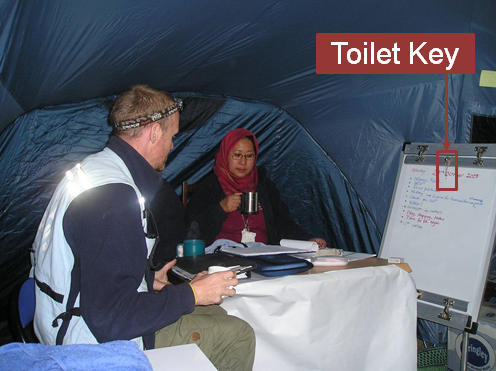
- Facilities key (Pakistan earthquake 2005): Where the international responders set up their forward operations base, there was only one toilet. The key to that toilet was held in the central information center. In order to get the key, responders obviously had to visit the information center and share.
- 3W data not shared? No flight (Indonesia tsunami 2004/5). The most senior UN official in Banda Aceh instituted a policy that humanitarians could not fly on UN-HAS unless their 3W and contact information had been shared with the Humanitarian Information Center.
- Contact details not shared? No flight (Sudan, 2005-07). The operators of UN-HAS used an openly available OCHA contact database to decide if someone was eligible to fly on any of their flights [this was neither agreed nor sanctioned by OCHA]. If the person’s details were not on the database, UN-HAS would not issue them a ticket.
- Social center(s) (Pakistan 2009-11, DPRK 2000+, etc). Coordination agencies have set up social centers that attract responders to come together, meet each other, and (as a result) become more willing to share data.
- Press coffee (Africa 2013+). In some of the long running African protracted emergencies, humanitarian press officers stopped holding press conferences. Rather they started something called “press coffee” where the journalists, public information & information management officers, spokesman and authorities hold casual events to talk about the humanitarian situation and share key information in both directions.
However, even if we can find creative ways to entice people to share - both carrot and stick approaches - we have not yet solved the overall policy challenge that stops information from flowing. There are some agreements within closed networks such as the Inter Agency Standing Committee’s Operational Guidance on Responsibilities of Sector/Cluster Leads and OCHA in Information Management [PDF], but these fall short on addressing the full community.
That is why I am working with Leandro Salazar-Liévano to draft the Open Humanitarianism concept. We want to leverage the open movement such that if a humanitarian organization or government (donor or recipient) wants to call itself an Open Humanitarian organization they will need to adhere to certain principles and behaviours, including an honest commitment to opening and sharing their data. When an organization has labeled itself as Open Humanitarian, I would expect no delays during any humanitarian crisis. And, if such an organization stalled at either the local or global level, then anyone could publicly “press” these organizations as Source recently did with some of the modern data journalism sites, like FiveThirtyEight, who promote open yet struggle to share their work. I want humanitarian organizations to strive towards being open, transparent, participatory, collaborative, and accountable.
I believe that if we can find the right combination of technology, human or social relationships, and overarching policy, we will soon find a more efficient and effective humanitarian system.
If you would like to share your data sharing stories or join Leandro and I in our Open Humanitarianism adventure, please comment below.
Andrej