Data Protection in the Humanitarian Sector - A Blockchain Approach
It is rather clear that the world continues to move into a more digital and data-driven direction. Of course, this path increases the importance of prioritizing cyber security and data protection in all organizations and technological solutions. There seems to be a never ending set of stories about cybersecurity and data breaches around the world. Techcrunch even writes up weekly summaries (PDF of 21-Apr-2019 story) highlighting the significance of the problem. Many countries do not even have data protection laws in place (see map below). Although sometimes it feels even slower at the international level, the United Nations Office for the Coordination of Humanitarian Affairs (OCHA) has recognized the importance of protecting the data of some of the most vulnerable people in the world and released draft guidelines for OCHA’s data responsibilities (PDF) in March 2019
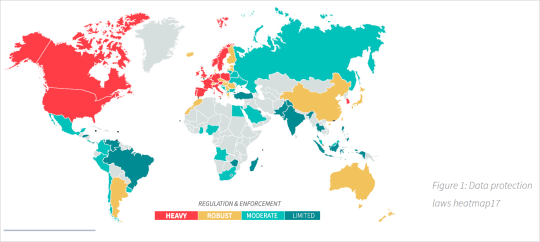
But, how do we ensure that the solutions organization build/buy and use are technically sound and thus protect the data they hold? Could Blockchain be a piece of that puzzle?
In mid 2018, with a mix of technological and international policy background, Irene Solaiman approached me with a passion for international security. She had been exploring the issue in relations to artificial intelligence and blockchain. After a couple conversations, we settled on the idea of conducting literature-based research to determine if Blockchain could aid data protection within the humanitarian sector.
Building on Irene’s work at Harvard, Vanessa Ko & my Blockchain paper in 2016, and other more recent Blockchain papers like Blockchain and distributed ledger technologies in the humanitarian sector, we have put together a paper entitled Data Protection in the Humanitarian Sector - A Blockchain Approach
[PDF]
As with any technology, there are challenges and pitfalls. But, Blockchain presents an option to remove many of the standard or common problems encountered in current technology. As technological solutions are built or replaced, “simply” incorporating Blockchain into the technology stack could help us build out a more (data) secure environment.
Essentially, could we ignore the current hype and just implement the technology each time the opportunity arises? Perhaps that is a bit too passive for some. But, the thought is that when we get to a point of simply implementing Blockchain by standard (vs talking about it), we will find ourselves at a more secure place as well.
Andrej