Fostering the Right Workspace - Strategic Considerations for the Humanitarian Sector
For anyone involved in humanitarian response, you will know that (physical) space in a response can often come at a premium with sudden onset disasters stretching it to an extreme. It is not uncommon to find ourselves cramped into a tent, a partially destroyed building, or a previously unused / unfurnished structure. Such situations logically dictate that most people will be working in a open, shared space. I feel fortunate that I enjoy working in shared spaces - the energy, the collaboration, and the innovation really “feed me”. I recognize that I may skew more to one end of the spectrum than others - I still remember needing to put on a headset to listen to music while studying in university as I found the library too quiet!
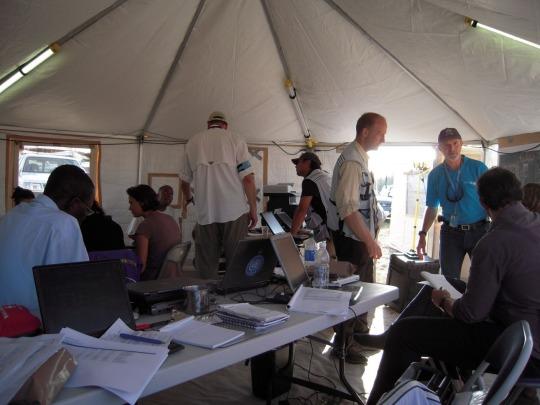
Over the years, I have looked at different physical and virtual models that could help with information management collaboration in-country. In 2013, a team explored the idea of resurrecting the Humanitarian Information Centre - but with modern touches (coffee modules, liaison modules, social media modules, translation modules and reach-back / remote support modules). Around the same time, I became more involved in the provision of remote support powered through modern technologies and helped found the Digital Humanitarian Network.
What I had not been thinking much about was the need for individual workspaces (i.e. quiet, private places). Reading the Social Sector Titan blog by Mark Slezak, I confirmed that my personal bias skewed me towards the open, social spaces. And, that I needed to better understand the need for different space types.
Last summer, I was joined by Emma Amaral who expressed an interest to study the three workspace types: physical & social spaces, online collaboration and individual workspaces. The result was a paper that compares them entitled: Fostering the Right Workspace - Strategic Considerations for the Humanitarian Sector. While exploring the different types, the paper also discusses their respective pros and cons as well as key takeaways for the humanitarian sector.
 [PDF]
As is the case for any sector, different types of workspaces provide various benefits and drawbacks for productivity. It is important for the humanitarian sector to continue to reflect on what conditions are necessary for humanitarians to be the most effective at their work. These conditions are dynamic, depending on factors such as the nature of the humanitarian crisis in question, and are also evolving with the integration of new technological tools in the sector. Humanitarians should continue analyzing the opportunities that different types of workspaces provide, and when they should be considered most useful.
Andrej