Delivering Aid with a BufferBox-like Solution - AIDBox?
A few months ago, I came across BufferBox and was thinking that it would be a great service which I could personally use. Quite often, I order things from Amazon in Europe, but they refuse to ship into Switzerland. So, I have to either ship to a friend in nearby France or use a “Point Relais” on Amazon.fr. Effectively, with BufferBox you order something and have it delivered to a nearby BufferBox and you receive a PIN (after delivery) that allows you to open the box in which your order has been stored.
Now, what I am wondering is, could we use a similar model to help deliver humanitarian aid? Essentially and AIDBox.
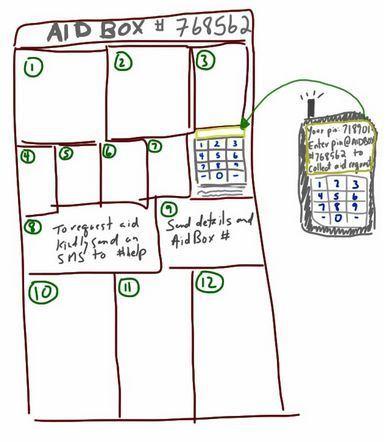
I am thinking of a few different AIDBox options:
1) Responding to demand. A person in need could send an SMS of their need (including preferred AIDBox location ID), a responding organization accepts that request, the material is placed in the nearest AIDBox, and the requestor is sent a PIN code they can use to open the box where their request is placed.
2) Propositioning What if AIDBox was a vending machine like device which was pre-populated with common items in need? So, if I needed two bars of soap and two blankets for my family, I could send an SMS with my needs (and my preferred AIDBox location ID), the managing organization would accept the request, and a I would receive an SMS with a PIN code to enter into the machine. The AIDBox would then dispense two bars of soap and two blankets.
3) Raw Materials. Perhaps we could pre-position raw materials in something like a AIDBox and when someone requests an item, they would be given a PIN code with which they could get the raw materials and instructions. Using these, they could arrange to have the necessary products printed by a 3D printing service nearby.
Yes, there would be various security concerns. But, I suspect that many of those have been dealt with by the various UN Agencies, NGOs, Gov'ts, etc who already deliver aid.
The other question people might ask is about possible abuse. The benefit with this approach is that it is based on a mobile numbers. So, if the affected person wanted to receive aid, they would have to register their mobile number with a central service thereby ensuring their cannot make an abusive numbers of request. [Even if they do not have to register, we would see multiple requests from the same number and could program systems to watch for patterns of abuse]. Also, having these numbers would provide the aid community with a very targeted group to whom we could communicate with when wanting to share or request information related to the emergency.
I suspect that there could be several novel ways to use this concept in emergencies. I would love you hear your thoughts.
Andrej