Philippines: An ideal place for an humanitarian innovation lab?
As I wrap-up nearly 3 months in the Philippines in response to typhoon Haiyan/Yolanda, I am starting to reflect on my work and on the humanitarian response to the emergency. Although there will be many lessons learned, best practices identified, and studies of the response, I have started thinking about the Philippines and what it could enable in the humanitarian community.
From an OCHA Information Management (IM) standpoint, we implemented many new solutions and approaches that we had not done before in an emergency of this scale. But what I have come to realize is that the Philippines provides the appropriate context to allow us try.
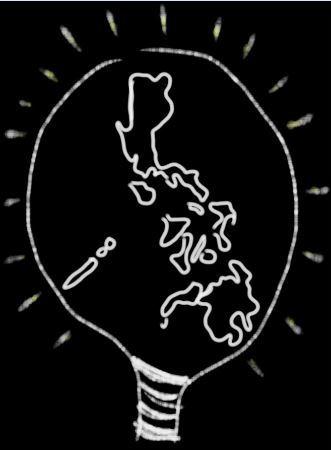
I have been writing and promoting innovation within the humanitarian arena for quite some time and I realized that the Philippines provided at least five attributes that would truly let it be a major humanitarian innovation hub. What are these traits you ask? Quickly put:
1) Disasters, Disasters, Disasters. A couple years ago, the World Disaster Report ranked the Philippines as the third most disaster prone country in the world behind a couple small pacific islands. The Philippines has regular emergencies across the country. In 2013 alone there were 4 emergencies that UN-OCHA responded to - a typhoon, an earthquake, large floods, and internal displacement from conflict. This “regular disaster” scenario has created a culture of people who remember, know what it is like to be affected, and are generous to fellow citizens. Humanitarianism is built into the Filipino culture.
2) Failure. What amazes me about the Philippines is that it has a culture that accepts failure. How many times has the country’s president been removed early or been deemed corrupt. I lived in Manila through EDSA II in 2001 and have loosely followed their politics since. To me, the politics in the country is like a Hollywood drama complete with real life gossip and rumors. Yet, the people do not give up on democracy. They keep trying time and time again despite the politicians’ failures. The same applies to private industry and civil society. They have built failure-tolerance into the culture.
3) Techies. The Philippines has a huge tech-savy population. I remember arriving in Manila in 2000 and being startled at how many people had cell phones and how most could send an SMS message without looking at the phone. Today, they have a vast number of young developers who are keen to help. So, not only is this group technical, but they have grown up in a humanitarian, failure-tolerant society.
4) OpenData. One of the first meetings that I had with the government in the response to Haiyan/Yolanda was with the OpenData group. The meeting was not in a government building or in a UN office. It was at a hackathon. Although a relatively new group, the OpenData group has been moving quite quickly in their efforts to open government data. I sat with the CIO of the group and had an amazing chat. We talked about a Kickstarter for Emergencies and we even aligned on ideas for a digital aid currency. These are people who are thinking forward.
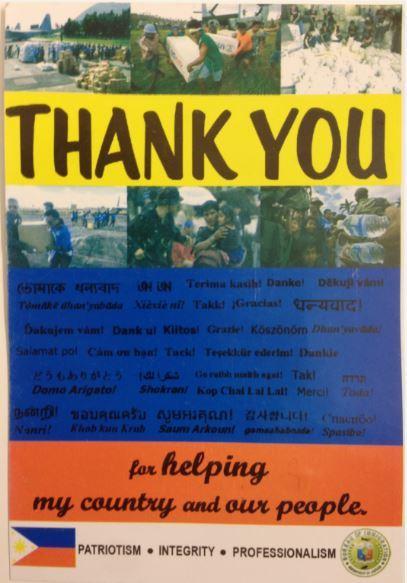
5) Thankful. In all of the countries that I have visited as a humanitarian, I have never met such a friendly and thankful society. I was driving around with an Ormoc city offical and his first words were of thanks and praise towards the humanitarian community. He did later ask about what I call the humanitarian branding war, but overall he was extremely positive. When departing the Philippines, I was given a ‘Thank You’ card by the customs offical. Never have I received such thanks. No matter where I went or who I spoke to, they were appreciative of the help from the international community.
Putting these five cultural features together creates a perfect country for a humanitarian innovation lab. The population has a humanitarian nature, accepts failure, is full of techies, is pushing forward on OpenData, and is truly appreciative of people even trying to help. If you are still a bit skeptical, step back and ask yourself: “How many other countries or organizations have you seen with such a perfect combination of traits?”.
As an international community we keep responding to emergencies in the Philippines. Perhaps it is time that we stick around a bit longer to collaborate with the Filipinos under the specific aim to develop innovative humanitarian practices that could be applied around the world.
What do you think?
Andrej